Digital security is no longer a concern only for large corporations. Small and medium-sized businesses as well as startups are increasingly confronted with the challenge of protecting their systems, data, and digital processes.
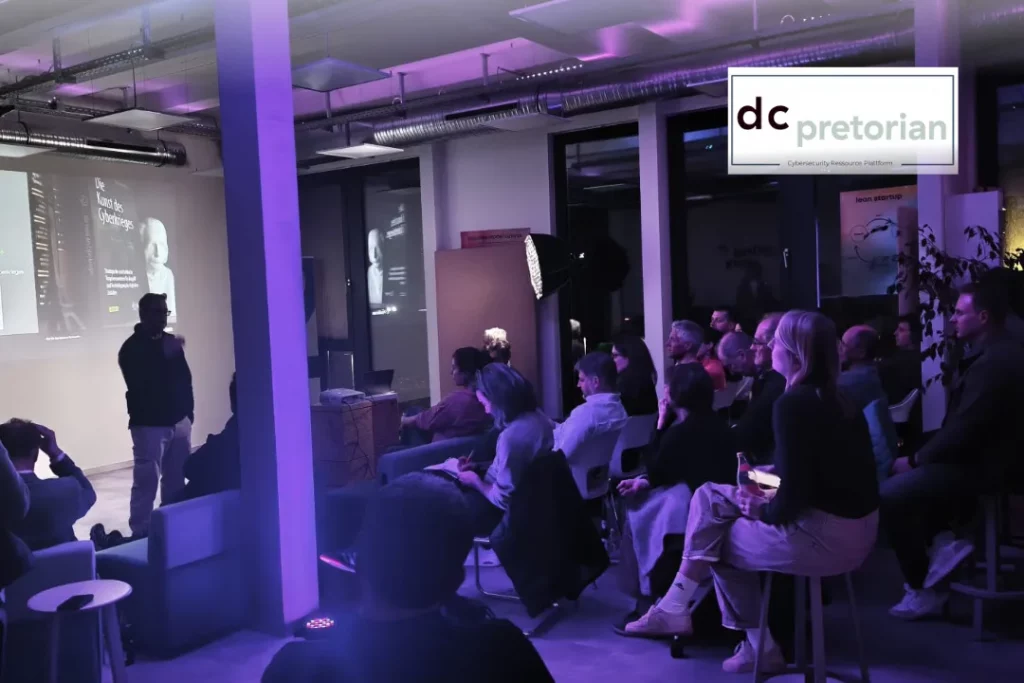
These questions were also at the center of a recent event at Gründerwerk Dachau, where around 40 participants gathered for an open exchange about cybersecurity, real attack scenarios, and the so-called digital underground.
Insights from a Cybersecurity Event in Dachau
The evening featured a presentation by Peter Kestner, CEO of dc pretorian. His talk focused on different types of hackers, common misconceptions about hacking, and the differences between internal and external attacks.
Many people associate cyberattacks with highly complex technical operations or dramatic scenarios from movies. In reality, however, many security risks arise from everyday vulnerabilities. Unclear processes, lack of awareness, and simple human mistakes often create entry points for attackers.
The discussion made clear that cybersecurity is not only a technical challenge but also an organizational and strategic one.
The Structural Challenge of the IT Talent Shortage
Beyond the technical aspects, the discussion also highlighted a structural issue affecting many companies: the shortage of qualified IT professionals.
Beyond the technical aspects, the discussion also highlighted a structural issue affecting many companies: the shortage of qualified IT professionals.
Organizations today must not only secure their digital infrastructure but also ensure they have access to the specialists needed to design, maintain and protect it.
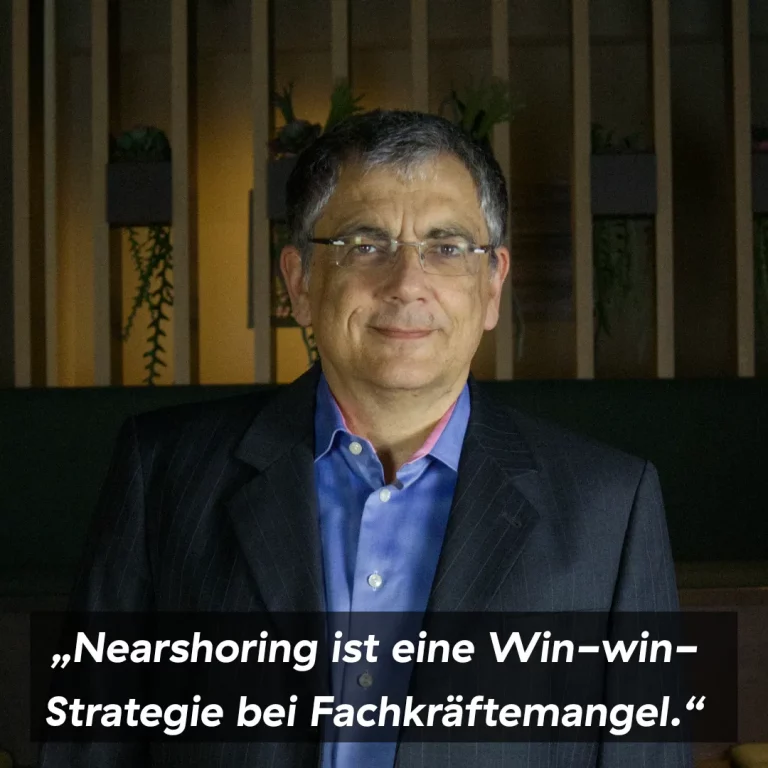
“According to Bitkom, Germany currently lacks 109,000 IT professionals – with families, that equals the population of a city the size of Augsburg”
Davide Criscione, CEO| DC Services GmbH
This talent gap has direct consequences for businesses. Security projects, infrastructure modernization, and digital transformation initiatives often become difficult to implement when qualified experts are scarce.
As a result, many companies are increasingly exploring new collaboration models, including international teams, nearshoring approaches, and flexible partnerships that allow them to access specialized talent across Europe.
Digital Platforms and New Working Models
In this context, dc nearshoring and dc pretorian operate a digital platform that connects companies with highly specialized IT professionals from across the European Union.
“Our company works like Uber – a lean platform that connects different actors.“
Frank Bindig, CEO | dc nearshoring
Through this model, companies can gain faster access to experienced specialists. An internally developed AI helps evaluate candidate profiles and match them with specific project requirements.
Such platform-based approaches can help bridge the growing gap between demand for digital expertise and the limited supply of qualified professionals.
Digital Sovereignty and Infrastructure
Another important topic in the discussion was digital sovereignty. Many organizations are increasingly questioning how and where their data is stored and which technological dependencies they want to avoid.
In particular, smaller companies are beginning to rethink their reliance on international cloud infrastructures and are exploring more controlled or internal solutions.
Exchange and Discussion in Dachau
The event at Gründerwerk Dachau showed the strong interest in understandable insights into cybersecurity – not only among companies but also among private individuals.
The open discussion led to many questions about digital risks, security strategies, and practical measures that organizations and individuals can take.
Media Coverage
The event was also covered by the Süddeutsche Zeitung.